
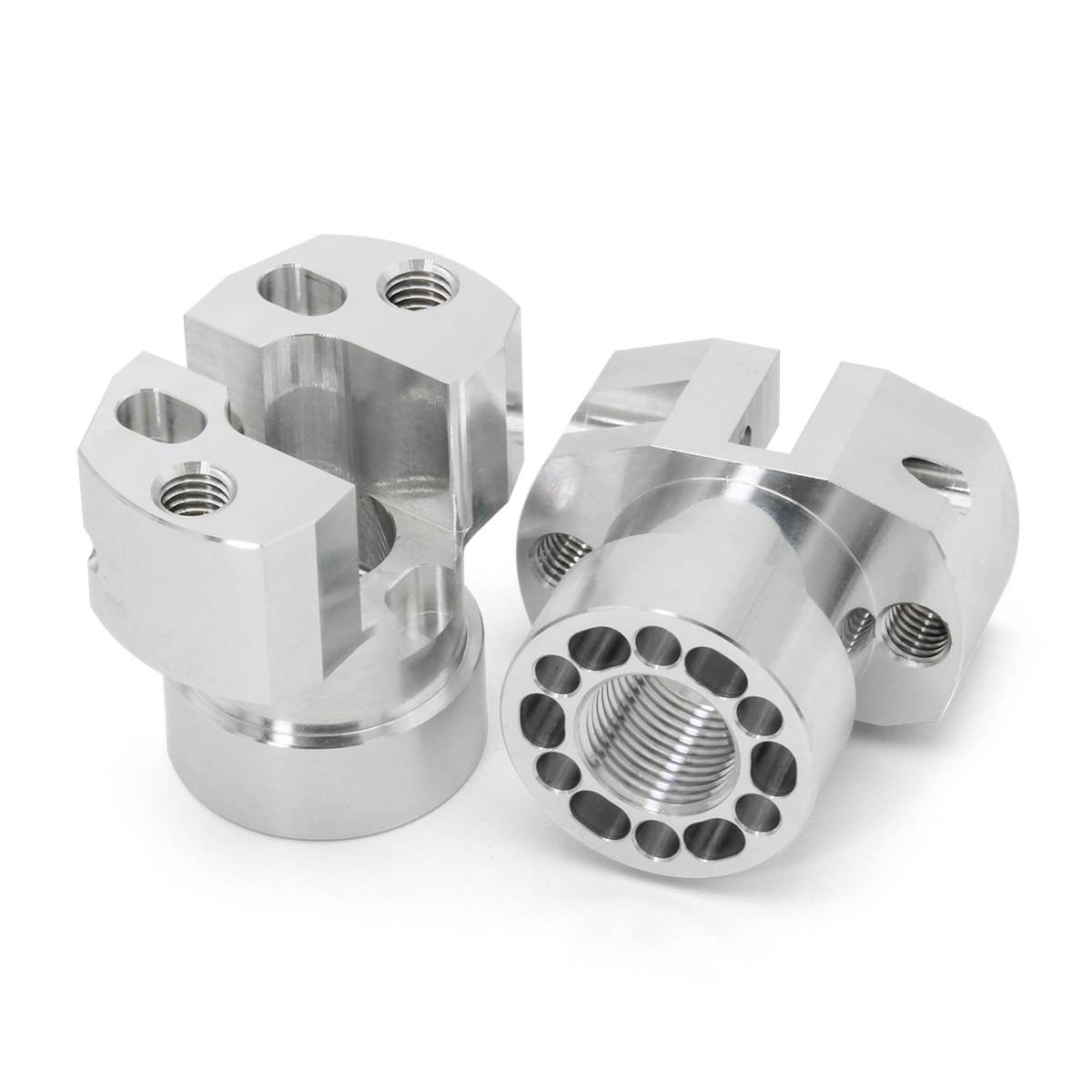
Complex parts often require holes, pockets, angled surfaces, and interfaces on several faces. Moving the same part through multiple separate setups can introduce variation each time the workpiece is re-clamped.
Fewer Setups, Better Feature Relationships
5-axis machining allows more features to be completed from different orientations without repeatedly removing and repositioning the part. This can help maintain alignment between angled surfaces, holes, and critical mounting interfaces.
3+2 Axis Machining
In 3+2 machining, the rotary axes position the workpiece at a fixed angle while the X, Y, and Z axes perform the cutting. JeaSnn currently provides 3+2-axis machining for suitable complex parts.
Review Before Quotation
Machining feasibility depends on feature access, part geometry, tool clearance, material, tolerances, surface finish, and inspection requirements. Critical dimensions and positional relationships should be identified on the drawing before production planning.